This post was written by Nat Al-Tahhan.
Visual note-taking, scribing, live-drawing, graphic facilitation, graphic recording, infodoodles, sketch-noting… These fancy terms can be confusing for those unfamiliar with the discipline, but ultimately all refer to a similar practice of visualisation.
I’m Nat, a freelance designer & illustrator, and I’m going to shed some light on this form of visual communication for events, conferences, meetings and reports.
What is visual note-taking?
With my own method, which I call ‘visual note-taking’, the aim is to capture the essence of a conference, meeting, or report by llustrating soundbites, ideas and themes in visual metaphors.
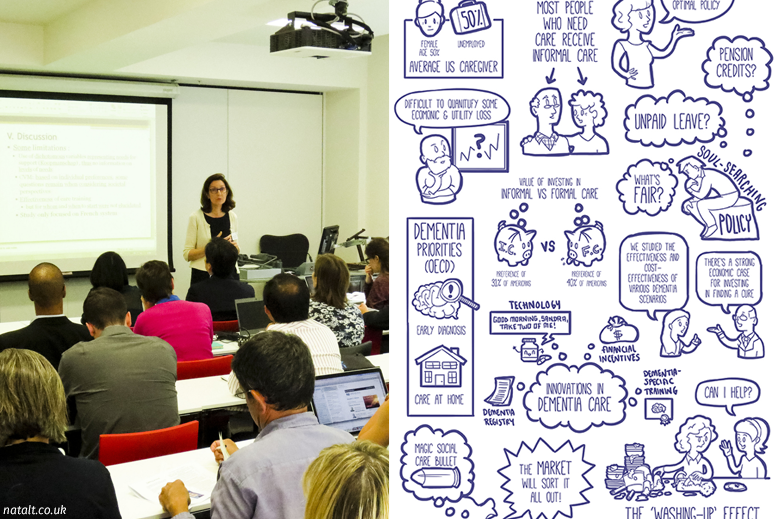
Excerpt from visual notes taken at the ILPN conference at the London School of Economics.
What’s the process?
Live:
Working directly into a digital format live on the day makes for a versatile piece that can be broken up, rearranged, repurposed, and easily shared to give the piece utility and longevity post-event.
Depending on the nature of the event, work-in-progress of the piece can be projected onto a wall or viewed on a screen for delegates to browse throughout the day – this is ideal for conferences with breakout spaces and networking breaks. In addition, collaborating with social media teams to tweet/blog the work in progress and providing individual illustrations to complement their coverage is a great use of the work on the day.
Remote:
Visual notes can also be produced remotely from reports, or post-event from recordings.
The process is largely the same, but the scale of the piece can be dictated, as there will potentially be more than the duration of the event to produce it.
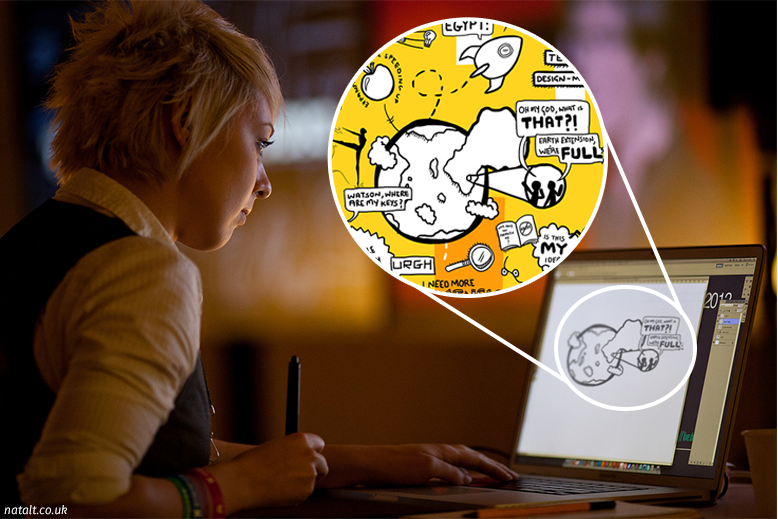
Live visual note-taking in progress, TED2012
What’s the benefit of visual note-taking at an event?
Aside from the obvious intrigue value of an illustrator drawing at your conference, having a visual representation of ideas will help with retention and engagement in your delegates.
The illustrations are accessible, highly shareable and fun to engage with – i.e. they’re very brain-friendly! They can be used to promote your next event, and when sharing with those who didn’t attend, this highly visual piece allows them to quickly get a feel for the day’s goings-on.
Some event organisers have been really creative with the finished pieces, including creating wall artwork for offices and spot illustrating reports and websites!
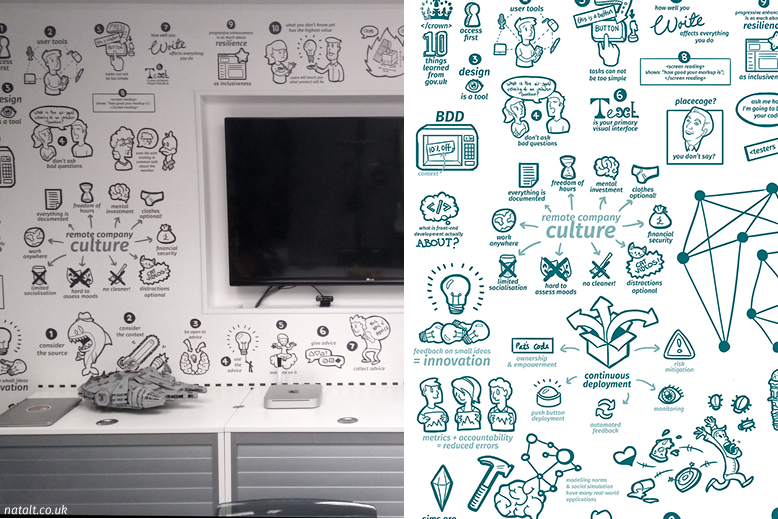
Wall artwork created from visual notes taken at re:develop 2014
When is visual note-taking NOT appropriate?
Due to the versatility of the medium, the practice of visual note-taking can be applied to many different event structures and even internal meetings. However, there are some cases where another form of visualisation could be more appropriate, such as very dataheavy presentations/talks – where an infographic might be the better route.
There are also times and places where it would be best not to display the work in progress at live events, such as on stage during talks, and during meetings – in these circumstances focus should always be on the person speaking, and illustration happening live is very distracting.
In summary
Visual notes are a fun and accessible way to capture and record your event, encapsulating the key ideas, themes and takeaways. When taken digitally they have a myriad of uses post-event, and can integrate with other forms of event coverage.
If you would like to see more examples of visual notes, as well as infographics and other forms of visualization, you can visit NatAlt.co.uk
Nat Al-Tahhan | @natalt