Category Archives: Uncategorized

Visual notes

By | | No Comments

Visual notes are a useful way of capturing key messages in visual form. Note taking occurs in real time, at a conference, meeting or presentation and the image(s) produced are the artist’s interpretation of what is shared. The visual note consists of reactive pieces for key concepts shared that when viewed together give a feel for the overall event.

  • Book a visual note taker in advance of your event and provide them with as much background information as they require
  • Some graphic facilitators prefer to draw on paper in full view of participants, others may prefer to note take using a computer – be clear about how your note taker works so you can prepare in advance
  • Try to avoid using jargon, acronyms and specialist language (a good habit to get into)
  • Identify in advance how you will share your visual note
  • A visual note is a brilliant way of capturing key information, but it should complement other outputs, not replace them in their entirety

Consider impact early

By | Uncategorized | No Comments

There is a recurring theme in the posts on this blog that relates to planning, timing and impact activity. One of the six lessons highlighted from the SCEIP project was to plan, another was to consider your audience, yet another key message is around incorporating creative knowledge exchange methods into research proposals.

The common learning is that you can never consider impact too early in the research process.

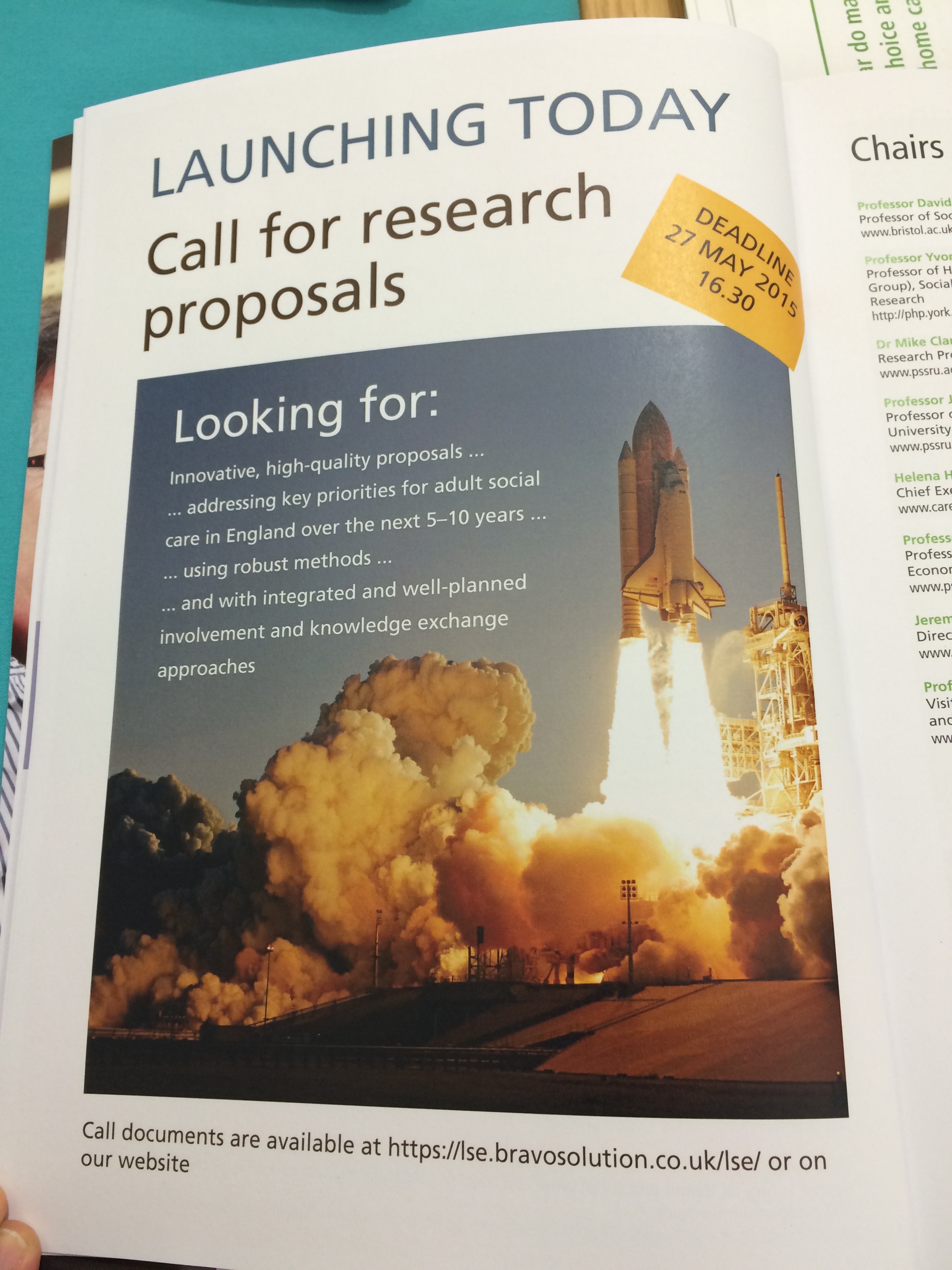
A couple of weeks ago the NIHR School for Social Care Research issued a Call for Proposals. Charged with growing the evidence base for adult social care practice in England, there is much to be done to make a positive impact.

SSCR Call

This post will highlight how this website, and the tools and ideas within it, might support a research proposal.

1) Consider what impact means to you

It may be that the type of impact your research in social care could have is far broader than you’d initially considered. Visit the ‘What is impact‘ section to explore this further. The temptation can be to consider ‘impact’ to be academic impact, as defined by REF, or perhaps also to consider social impact in terms of health and well-being, but there are far more areas in which social care impact can happen including economic, political and legal domains.

2) Identify who your stakeholders are

This may seem obvious, but often this stage appears to be skipped. We think we know who are our stakeholders are, sure they include funders, research participants, colleagues, but if we really want our research to have impact then it’s good to consider who else we might inform or involve. No research happens in a vacuum, so take some time out to consider who could support your research to have impact, map your stakeholders and always consider this before you start, not just at the end when you want to distribute findings!

3) Develop your research ideas

Try to keep your thinking open in the early stages of developing ideas, you can narrow them at the next stage, but initially when developing ideas try to think big. Consider what you already know from previous research work, you’d be hard pressed to find a research report that doesn’t end with the statement that ‘more research is required’, but perhaps more importantly talk and listen to people who use social care to identify their priorities. If we truly want our research to have an impact on social care then we need to understand how it will be used by those accessing or providing social care. There are a number of ways in which you can gather this input (check them here), you could hold an unconference or have a brainstorm over coffee and cake. However you form your ideas we believe that the investment early on will pay dividends to the quality of your proposal and potential impact of your work.

4) Refine your ideas

Once you have a pool of research ideas, and a map of your key stakeholders, make some time to consider the two together and refine your ideas. You can do this alone, as a project team, or publicly with some of the stakeholders you’ve identified. You could also refine your ideas in public, offering your thinking aloud via social media e.g. you could write a blog or tweet your ideas and ask readers to identify their priorities. Consider using the RATWOE approach to streamlining your options.

5) Be ambitious!

When it comes to writing your research proposal, the key thing is to be ambitious! Consider the input stakeholders have provided throughout, reflect on what has worked well, what has created impact in the process so far and write those methods into your research proposal. Funders repeatedly told us during the SCEIP project that creative methods for knowledge exchange and impact activity would be funded if costed at proposal stage; reluctance sets in when researchers return for more money later in the research process due to initial poor planning.

When submitting a proposal researchers have a golden opportunity to consider what methods they can use early on, to understand the resource implications, consider the barriers and enablers to the methods and what you can do to mitigate or support them. We hope that the descriptions of the tools and methods detailed on this site will help you in this process; you can focus on impact methods alone, consider the tools for managing impact, or view the stages your research is likely to take and see what methods work at what points.

We must move past the days of impact being considered at the end of a research project, if we wish to truly improve social care practice then we need to consider impact and research together, at every stage of the research process.

Myth Busting Knowledge Exchange Methods

By | Uncategorized | No Comments

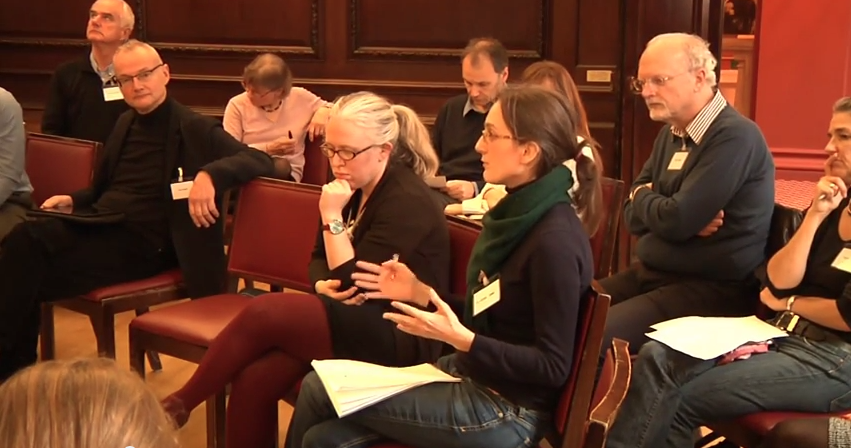
Back in November we held a one-day conference to share and deliberate on the learning from the SCEIP project. You can watch the videos from the plenaries at that event by clicking on the link. The day included three workshops which were opportunities for participants to debate and discuss in more detail. One of these workshops focused on knowledge exchange methods, what we know about them, what people had tried, what they had learned, and what their fears and hopes were. This blog post will share some of the discussion, there was so much we will need to return at a later date with more.
Screenshot 2015-02-17 10.40.01

The workshop discussion involved a range of people, some of whom were researchers, some who worked in sector-led improvement agencies and organisations, and some who identified themselves as working in social care in a paid or unpaid role. At least one person said that they used social care services, so we had a real mixed group.

In this first post I wanted to highlight three myths that were busted in the discussion, a later post will look at learning points that were shared, areas where it became clear we did not know enough, and the potential role of metaphor. Today though, let’s start with some myth busting.

Myth busting

  1. There’s not enough money available for creative knowledge exchange methods
  2. Practitioners and non-researchers are not interested in, or are sceptical of, research
  3. Creative methods are gimmicky and won’t be taken seriously

 Myth 1: No money 

The workshop consisted of a number of people who had used creative methods for knowledge exchange. People in the room had used visual note-taking and infographics, video, comics, blogs, singing and music making, drama and arts activity, yet despite this the myth about funding was still present.

Time and again we hear doubts about research funders providing funding for knowledge exchange activity, and time and again we hear from funders that they *will* fund, providing it is an integral part of a proposal. Funders may be reluctant to fund additional dissemination activity at the end of a project if researchers run out of time and money, but it appears that a lack of money is not necessarily a barrier to using creative methods. The key is to think early about what you’re trying to achieve, what groups you wish to collaborate with, and what approaches or methods you wish to use.

Myth 2: No interest

Throughout the SCEIP project we have regularly heard from researchers that it is proving increasingly difficult to find research sites in social care; that practitioners working in the field do not have the time, interest or incentives to engage with research activity; or that there is a scepticism about the value of research. We have also heard regularly from practitioners that research is not timely, is not relevant, and is not realistic in the demands it places on those who try to access or use it. While the nature of our project means that we are likely to meet self-selecting (and therefore interested) groups from research and practice, the discussion in this workshop very much dispelled the myth that there was no interest.

Workshop participants passionately argued that there was interest, that we needed to allow for nuance when considering motivations for engaging with knowledge exchange, and that researchers getting to know their potential collaborators (or end audiences for their research if they did not intend to co-produce it) would help them make sensible decisions. There was a call for all interested parties to take time to understand the attitudes and assumptions of each other and create a shared agenda from the very beginning (ideally before an application for research funding is submitted).

Myth 3: No point

The third myth that was dismissed within the workshop was in relation to the appeal, or seriousness, of creative knowledge exchange methods. There was some discussion about whether these methods would be seen as gimmicks, or amusing side shows for serious research, or whether they were an innovative way of reaching new audience groups and valuable in their own right.

Nic Brimblecombe shared her experience of a user-focused project on young people with mental health difficulties. They produced a comic and illustrations to share the findings of their research (more on that next week). Nic dismissed this myth, as many have tried to before, with the simple truth that different people like different formats. The comic attracts attention and is likely to appeal to young people more than a research report, but that does not mean you can have one without the other.

Conclusion

So there you have it, the workshop discussion certainly suggested that there was a point to creative knowledge exchange methods, that there was interest and that there was money available to fund it (if it was planned in the right way and at the right time). If you have any thoughts of your own, or examples of how you’ve addressed these myths, then please share them in the comments. Thank you.

Where the website idea came from #sceipimpact

By | Uncategorized | No Comments

In July 2014, the SCEIP project together with NIHR School for Social Care Research held a residential event for Early Career Researchers working in social care and health. A small, select group of PhD students, researchers and pracademics came together for two and a half days to discuss knowledge exchange and impact, what they meant and why they mattered.

In preparing for this residential we compiled a printed workbook. The workbook contained tools and exercises to support people to think about impact, their research practice and stakeholders, and different methods of knowledge exchange or engagement.

In the final session at the residential we were discussing how things could be improved and a call was made for a web version of the handbook content. This is where the idea for this website was born.

In an attempt to make this information as widely applicable to social care and health as possible, we have tried to adapt the content and tone slightly so it is not just focused on Early Career Researchers. While invariably useful for that group, we hope that the information, tools and methods contained within this website will be as useful to other groups who are looking to coproduce research together, to ensure all those who are interested can participate within the research and impact processes.

This is very much the beginning. We are looking for people to share the methods that they themselves use to create impact in social care and/or to share the tools and methods that they use to manage the impact process. In time we hope to incorporate more case studies and examples of how the methods work in practice.

We hope that the current content will inform and inspire. Please take some time to look around the site and let us know how well it does that. Please also join us in growing the site. Thank you.

Brainstorming

By | | One Comment

Brainstorming is an often overlooked part of the innovation process. A facilitated group brainstorm session can be a good way to uncover new ideas within a team, get to know team members and secure buy-in and social capital for the resultant ideas. Brainstorming can also be conducted alone.

The critical aspect of the process is the external description or articulation of ideas. Often post it notes or notecards are used to record each idea. The external articulation of ideas in this manner enables them to be sorted, or expanded upon, as part of the session or in subsequent activities, such as when Refining Ideas or Identifying Research Questions.

Key things to consider in facilitating or conducting a brainstorm process:

  • There should be a culture of ‘no idea is wrong or too wild’
  • Ideas should not be critiqued or discussed in detail
  • An approach of ‘yes, and…’ as opposed to ‘yes, but…’ in responding to ideas and suggestions helps to build ideas and create an environment where everyone feels comfortable contributing.

Storyboarding

By | | No Comments

A storyboard is a series of sketches, drawings or pictures that visualise a sequence of events. They can be useful in planning activity for identifying key messages and points. Storyboards can be used by an individual as a solo activity, or by a group collaborating around impact activity.

  • Commonly pictorial storyboards are drawn as comic strips, with sketches of activity with visual cues, to gain insights into the experience represented
  • Storyboarding can also be used by academics to outline a structure and narrative for written work; software is available to assist eg Scrivener but it is also possible to use post it notes or pen and paper
  • Identify key themes from your work, separate out one per flip chart paper. Identify stakeholders (see Stakeholder Mapping), detailed evidence relating to the overarching theme, and other relevant information (eg methods of engagement) and write onto post it notes.
  • Use the post it notes as a prompt, adjust them as further themes emerge and use them to plot your narrative or argument in your paper, chapter or report.

Comics

By | | No Comments

Comics can be an excellent way of visually presenting key research information, findings or discussion points. You need to be specific about the information you wish to share and what audience you intend to target.

The exact process that you go through will depend on your illustrator or cartoonists methods. You can reasonably expect to:

  • Break your story, research process or method down into key scenes or sections (see Storyboarding)
  • You will work with an artist so you do not need to draw the comic yourself, but you may wish to sketch any ideas about how each section could develop or be presented. Alternatively draw up a bullet list of key points for each section
  • Ensure key points are highlighted
  • Work with the illustrator to ensure key messages are incorporated
  • Remember your comic will share key points but it does not need to include everything from your final report, so don’t try!

Lightning Talks

By | | No Comments

There are many different versions of lightning talks that you could use e.g. Pecha Kucha or Ignite, what they all have in common is that the time available to present and engage your audience is usually no more than 5mins, and never more than 10mins.

Condensing what you have to say into five minutes takes real skill and planning. It is also a really valuable exercise for the presenter, and usually very enjoyable for the audience.

  • Prepare an information sheet for presenters, be explicit about exactly the time allowed, whether they will be allowed to use slides, whether questions or clarifications are included within the time allowed
  • Identify a strong chair person who is prepared to cut people off mid-flow if they are over time
  • Consider whether you would like to have a way of indicating to presenters that they have 2mins and 1min left (and if so, find some markers)
  • If your talks are a stand-alone event you will need to book a venue and promote them
  • Consider videoing talks or live streaming them online to share with a wider audience

See Pecha Kucha and Ignite for more information on the format.


Meet the Researcher

By | | No Comments

As researchers, with expertise in specialist areas, we can sometimes underestimate our own value and worth to the world at large! Traditional academic impact work has focused on sharing learning with academic peers, this method aims to reduce the barriers of connectivity to experts, for the general public or wider stakeholders.

  • A meeting could take place face-to-face, in a presentation or seminar environment, or online
  • Try to identify as many opportunities as time allows, maybe start with one a semester (this method can prove particularly useful to ECRs who wish to improve their networking or presentation skills)
  • Identify key stakeholders (see Stakeholder Mapping) who may be interested in you or your work – try to think of groups on the periphery of your research study e.g. schools, care homes, book festivals, carers or advocacy groups, charities or campaigning organisations
  • Make contact offering them the chance to meet with you; you could offer to give a presentation about your work, lead a debate or question and answer session, or just join them for coffee
  • If you wish to hold an event online, identify the platform you wish to use (it could be a blog, a twitter chat, a discussion with a facebook group), contact them with your suggestion
  • Prepare, attend and follow up with any contacts you make (see Network Building)

Online Discussion

By | | No Comments

There are many elements of the research and impact process that can benefit from an online discussion e.g. collecting ideas or input, sharing progress, planning dissemination activity, sharing findings. Pretty much any point that could be helped by a discussion, could benefit from an online discussion. The added advantage of holding that discussion or conversation online relates to accessibility.

  • Online discussions require IT access, but save on travel time and enable geographically dispersed people to come together
  • Choose the platform that works best for your intended audience e.g. hold a webinar, join a regular twitter chat, participate in a facebook gathering, or organise a Google hangout
  • Depending on the platform you choose to use, discussions could be moderated or open – try to keep conversations as open and accessible as possible (while ensuring participants feel comfortable to share)
  • Having a loose agenda, or set of questions that will be discussed, can help people to frame their thoughts in advance. Consider gathering contributions from your network in advance
  • Nominate someone to facilitate and ensure you don’t get stuck on one question for too long
  • Consider how you will record the discussion and share outputs